Writers of the Catskills: In Conversation with Julie Fogliano (TMWYR Ep. #61)
A series of interviews with literary voices living and writing in The Overlook Region.
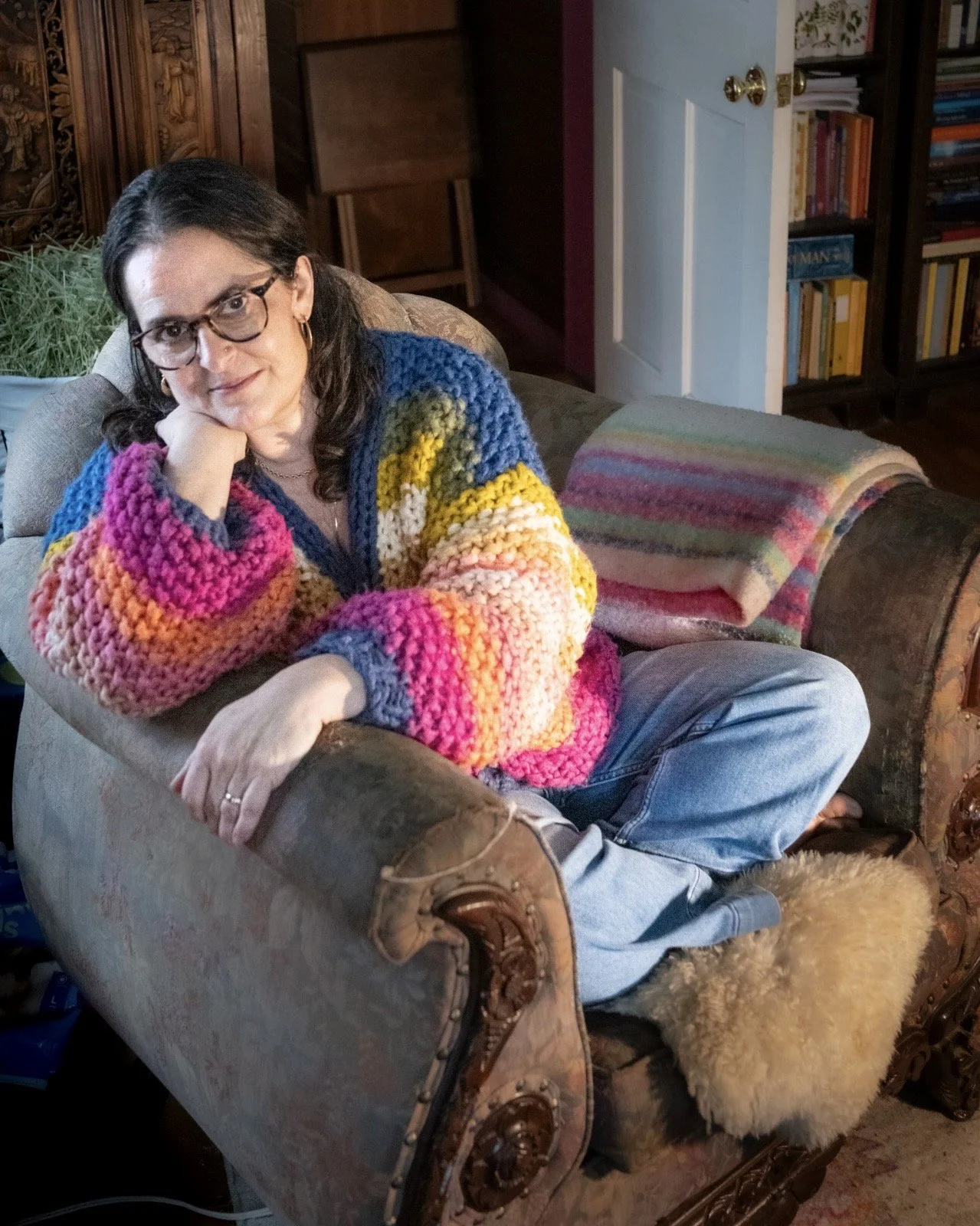
(Photo Credit: Dion Ogust)
My conversation on February 25, 2026, with Julie Fogliano.
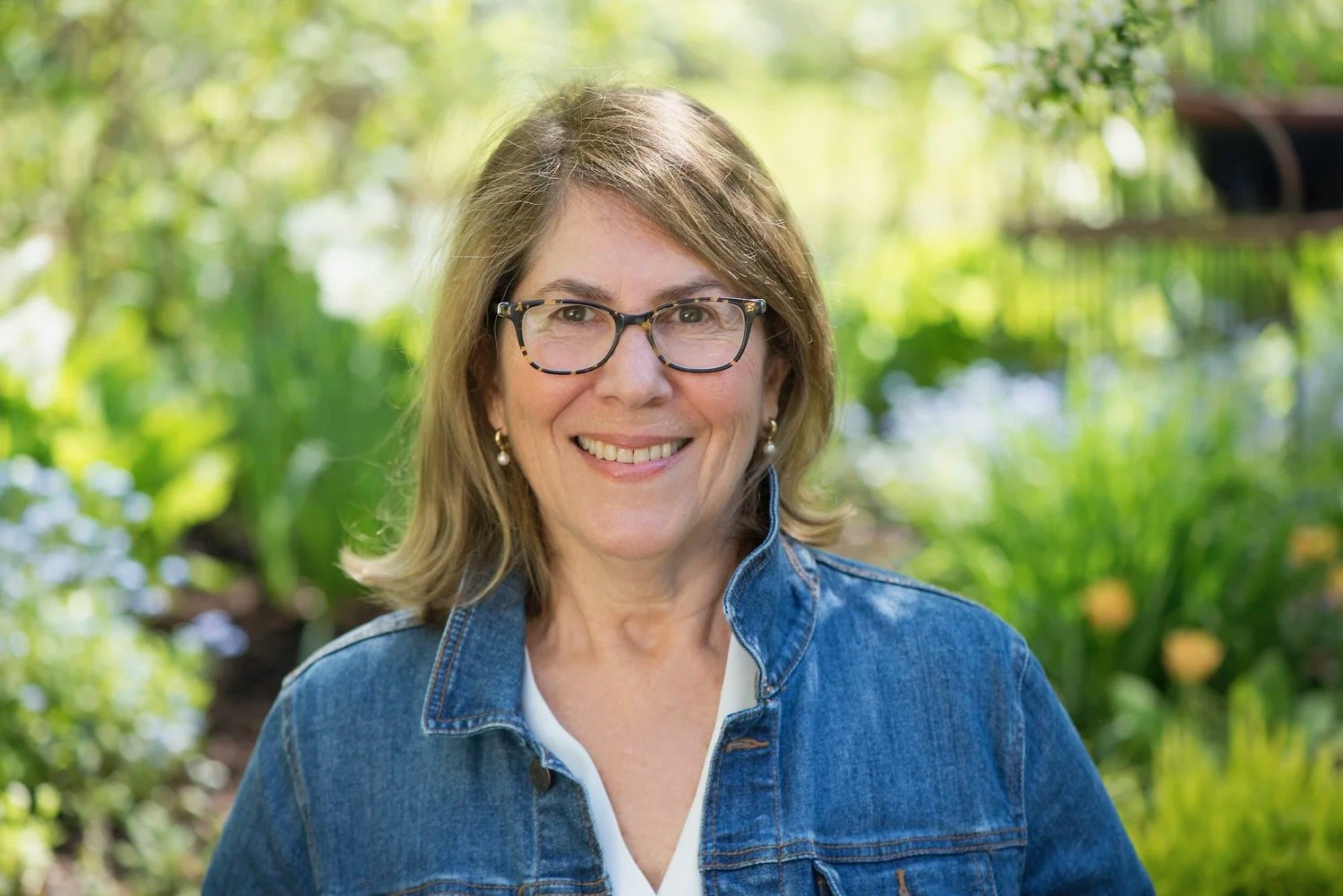
Julie, a longtime resident of West Shokan with her husband and children, has had a career focused on children’s literature, as a kindergarten teacher, in her work as a children’s book publisher, as a bookseller at the premier New York City children’s book store, Books of Wonder, and as an award winning New York Times bestselling author of books for children.
After publication of her first book, And Then It’s Spring, in 2012 Julie received the Horn Book Award, a literary award that's been given out annually for almost 60 years, and in 2013 the Ezra Jack Keats Award, given annually to an outstanding writer and illustrator early in their career. After the release of When Green Becomes Tomatoes: Poems for all Seasons, in 2017 Julie received the Claudia Lewis Award for poetry, given each year by the Children's Book Committee of the Bank Street College of Education. Several books have followed.
Julie has said that “when she's not folding laundry or wondering what to make for dinner, she's staring out the window waiting for a book idea to fly by.”
A condensed and edited version of my interview with Julie was published in The Overlook, community journalism serving Hunter, Hurley, Olive, Saugerties, Shandaken, Windham, and Woodstock, New York, and our conversation can soon be heard on my podcast, “Tell Me What You’re Reading”, available on Apple Podcasts, Spotify and wherever else you listen to podcasts.
Howard Altarescu
HA: Julie, it appears that you've caught lots of book ideas that have flown by your window. Welcome to the podcast and to this discussion for the Overlook.
JF: Hello there, thanks for having me.
So how did you get started? What was your first book and what inspired you to write your first book?
JF: How did I get started? What was my first book? There was a very big gap between the two. My first book is called And Then It’s Spring. It's illustrated by Erin Stead. And the inspiration, just to answer the question about that book in particular, the inspiration for that came from, literally at my window. It didn't fly by, but it was there. I was basically just waiting for the grass to turn green. I was waiting for the green to happen, you know, as winters can be gray, and dreary, and sometimes a little bit depressing. Although this winter, very exciting. But, yeah, I was just waiting for things to start turning green, and I was impatient, and that book just kind of popped right out, it came out in one big piece.
HA: Were you writing at all beforehand?
JF: Yes, I knew I wanted to be a writer since I was in high school. I didn't know I wanted to be a writer for kids until college when I was in a writing workshop, and I was looking at the people around me, and they all just kind of seemed to know everything and have everything all figured out, and I was like, this is not the audience I'm interested in. I want a little wonder and joy in my writing experience. So that's when I realized, like, okay, this, I'm writing for kids.
HA: Where was this college?
JF: I went to Bard, so did my cousin, so did my husband, and so did my son. So we're a real Bard family. So I decided then that I wanted to write for children. I worked in children's publishing, I was a kindergarten teacher. I worked at a children's bookstore in Manhattan for a few years, but I wouldn't say that I ever considered myself a writer until my first book came out, which is so silly, because, you know, you don't need to be published, and, you know, making money from something in order to be called a writer or an artist, but I didn't allow myself to say the words until then. And even then, I was still a little bit like, Why am I here?
HA: Who was the publisher?
JF: I worked for Orchard Books, which, while I was there, was bought by Scholastic.
And then I worked at Books of Wonder in Manhattan. That experience working there was really, well, it just changed my life. It was an education in children's literature, I felt like I got a master's in children's literature at the bookstore. We had to read everything and recommend the books and take it seriously. and we all took great pride in that. Everyone had to read as much as we possibly could so we could be educated and properly make recommendations. But also, everyone I worked with was either an aspiring illustrator or an aspiring writer. And so, the people I worked with, they just became, they became like a little community and we all supported each other, and eventually all helped each other get published. I don't know where I would be without them
HA: That's wonderful. How long were you at Books of Wonder?
JF: I was there for 4 years, it was an amazing experience all around and I do miss it a lot. I miss being in a bookstore every day.
HA: How long were you at Orchard Books?
I just wanted to get my foot in the door, so I took a job at Orchard Books as a marketing assistant. It just wasn't for me. I'm not an office person. The people were wonderful and they had some great books, but it wasn't the right environment for me. I realized I hated working in publishing, so it was a short-lived thing. So that's when I hopped over to Books of Wonder.
How is it that you wrote poetry?
HA: I gather you are pretty much an inadvertent, published poet. Is that right? Is that a good way to put it? That wasn't what you were trying to do, but talk about the poetry you've written. What you wrote, what you were told was poetry.
JF: Well, that's a very fun part of my little journey. I said I'd worked at Books of Wonder, met these wonderful people. One of the people that I worked with there, named George O'Connor, was an illustrator and a writer, and has two series of graphic novels. Anyway, we worked together there, and he was always hearing me complain about, I don't, you know, I can't write for this reason or that reason. I was always full of excuses. And so, years after I worked there, he had come up to visit me, and I had, like, two little boys at the time. Like, they were little guys running around. I really had no time for anything. I was very overwhelmed with life, and he was like, Okay, my birthday is coming up this next week, or whatever it was. And he's like, For my birthday, I would love it if you would write one thought for me every day for a year. And I was like, You're nuts. No. Because, you know, the whole nature of our relationship is that he liked to tease me, like, insanely. So I was like, why would I write to you every day? You're just gonna mock me. And he was like, I will not. Anyway, long story short, for some reason, I did it, and my thoughts were mostly observations, and about my house, my kids, what was out the window, what I had for breakfast, whatever. They were very silly and small, but it was the first time that I had ever gotten into a regular writing routine in my life, where I wrote every single day.
And over the course of writing those thoughts, I started developing a voice, I had always tried to write a children's book, I was always trying to be someone, you know, one of the people that I admired, and in this case I was just being me, and I was just writing about my little life in this little house in the middle of the woods, and it just slowly evolved into my voice, and I couldn't have ever predicted what would come of it, or what my voice would have even sounded like, it was nothing like what I thought I would be writing.
I never thought I would look out the window and write about nature. Not that I don't love nature. I mean, I live in a beautiful place, but it's just, I thought I was gonna be a different kind of writer. So basically, I had this whole, you know, I had all these thoughts, and I think it was thought number, oh, I always get it wrong now. 256 or something, was the text for my first book, And Then it's Spring, and it just kind of came out, and I was like, Oh, this is cool. And I felt really good about it. It felt different. I felt excited, in a way that I never had before, about something I wrote. And of course I sent it to George because I sent him things every day, but then I also, just for the fun of it, sent it to my friend, Erin Stead, who I worked with at Books of Wonder, who was just finishing her first book, A Sick Day for Amos McGee, which went on to win the Caldecott. I sent it to her because it reminded me of a picture I saw on Erin’s blog, she was blogging at the time, and she loved it and took it to her editor without telling me. And she called me the next day and was like, Neil Porter will be calling you. He loves it. He wants to publish it, and he wants me to illustrate it. And that was how that got started.
And then from there, Neil Porter, who published that book and a bunch of my other books, he asked, So what else do you have? And I was like, oh, I just have a bunch of these thoughts that I wrote, like, you know, they're not anything, like, they're not books. And he's like, well, just send them to me. And I sent him a ton. And he was like, Oh, so you have the start of a poetry collection here? And I was like, I do not. I do not write poetry. I have nothing to do with poetry. And he was like, “All right, whatever. Hey, call it what you want.” And so that was when I started working on my third book, When Green Becomes Tomatoes, which is a poetry collection about the seasons.
HA: George and Neil? Wow.
JF: Oh, I know. Yeah. I know. I found myself surrounded by really amazing people who knew what to do with me, and I’m grateful for that.
HA: So, just clarify one thing. So 256 or whatever it was, your post to George that day, is that what became the book?
JF: Yeah, I think word for word, there might be one word change. It came out, and, like, it was, like, 2:00 in the morning, I remember, too, because it was, like, really late at night, and I was like, I don't want to write my thought. I'm annoyed. It's so dreary out. I just want it to be spring, and I was grumpy, and I was just, like, ready to ditch it and go to bed, which I rarely ever did, 'cause I really was committed to my thoughts of the day, and I was like, and all of a sudden, um, the words, “First, you have brown” came out, came into my mind, and I wrote it down, and then all of a sudden, the whole thing, out it came.
HA: That's amazing. That's so good. That's so good.
Is everything you've written intended for children?
JF: Everything is intended for children. They're just naturally who I'm talking to. Yeah. And that's not to say that, like, you know, adults haven't told me that they really enjoy them, too, or that they found something meaningful, or, you know, whatever, in my books, but it's not like I sit down and say, I'm writing a children's book right now. It's just naturally what happens. It's just that's the audience I was meant to write for.
HA: So I love the way you put it. That's who you're talking to. That's great. Yeah.
Are there themes that run through all of your books or some of them?
JF: My editor, Neil, I mentioned earlier, he used to say, he joked that he was gonna call me, “Julie Anticipation Fogliano”, because my books, oh, especially my earlier ones, always seemed to involve some version of waiting. Like, waiting for spring, waiting to steal a whale, waiting for your birthday to come. It's like you're always waiting for something.
I guess that makes sense, because when you're waiting for something, you're so in the moment, and you’re so ready to snatch it up when it comes, and it makes sense, knowing me. I'm very slow moving, someone who likes to observe and wait and watch. So, I would say that's a theme.
And also, my kids, they’re so much of my inspiration, especially when they were younger. So, the inner workings of their minds, it just always fascinated me, their language and all that stuff. So, you know, childhood.
What influences a parent or a child to buy your books, or children's books generally?
JF: I guess it depends, if they're just in a store and they're walking around, it's, you know, probably the cover art. Sometimes, they're very subject oriented. Like when I worked at the bookstore, people would come in with these very specific requests, my son really loves cucumbers and, you know, baseball, and I’d find a book on that.
My books are a lot quieter and they're not necessarily straight kind of stories with characters and dialogue. There are people who look for things that aren't something that you would necessarily find at some of the larger bookstores. I feel like now people know to look for my work if they're looking for something like that.
What has been your writing routine?
HA: I normally ask if you get up every morning and work for two hours. Does that make sense for a children's book?
JF: Sure, I mean, I would love for that to be my routine. It makes great sense. And I’d probably write a lot more books, but my kids are just now, you know, like, my youngest is 13. So, you know, my kids, they can now take care of themselves and I'm kind of reinventing what that all means.
What routine means for me? I don't drive anyone to school anymore. I don't have to wake up at 7:00 and make lunches, you know. So I'm trying to find my way into a real routine because writing is the thing that I love to do the most. It makes me feel most myself and it makes me happy, even when I'm not writing something, just writing just for the sake of writing. So, I'm trying to get back into that real everyday routine, because it feels really good. And a nice little result of that is, if I write something that someone wants to buy, well, great. But right now, my writing routine is just kind of chaotic. It's whenever I can snag a few minutes, it's kind of loosey-goosey. Unless I’m working on something, if I'm working on something, then I'm in it, and I don't want to move from it. But if I'm in between things, then I'm just kind of writing, there's no real structure.
And what is your writing process for a particular book?
HA: Sometimes writers organize in advance everything that goes into their books, others do not. What’s your process?
JF: I would say no organization, I always start with free writing. It's just what worked for me when I first started writing and I've just stuck with it. Sometimes, it comes out of nowhere. And sometimes I'll do it based on something that I think could be possibly a good thing to write about, like, you know, if my kids did something funny, for instance, you know, or asked a funny question. I write all those kinds of things down, and then I'll just kind of free write off of that. But that alone doesn't usually end up in a book.
You can have all of these ideas, but you have to find your way into them. For instance, my most recent book, Because of a Shoe, which actually came out two weeks ago, is about a kid who's having a hard time. They have to leave the house. They are in a rush, but they don't want to put their shoes on for one reason or another, and the kid has a tantrum, and the mom has a tantrum. And it was a subject that was very near and dear to my heart, because I was that kid once, and now I had that kid. And so, I thought this should be a no brainer. You know, parents deal with this all the time. But I just couldn't find my way in. Like, what was the story actually gonna be? And what was the tone, and what was the rhythm, and I didn't know any of that.
And so, I guess a big part of my process is just putting the idea right around here somewhere, and just letting it sit in the back of my head while I just go about my life. And over time, it kind of just evolved. The weirdest thing about this book is, I had that book in my mind, like in the back of my mind, but also a little bit more in my conscious mind because I really wanted to write it, but I was like, how the heck am I gonna do this? I didn't know what I wanted to say about it, really, and sometimes my way in is not what I want to say, but, like, a certain rhythm or a certain line or a certain something that will just trigger the whole thing. So in this case, weirdly, it was Sylvia Plath, which is a very unusual inspiration for a children's book. But, for some book event, in California, I was staying in a hotel, and thinking about this, thinking about this book and whatever, and the word shoe kept coming into my mind, and then all of a sudden, I just kept hearing, like, you know, “could you not do, do not do any more black shoe”? And that kept going on and on and on in my head, and then it turned into, “because of a shoe, a two tight shoe, a two loose shoe”, and those lines from what would be my book, kind of were just merged together, and, and then I started writing based on that little thing that I murmured. I just took, “because of a shoe, a too tight shoe, a two loose shoe”, and just continued writing it, and, again, it kind of came out in one shot after that. It was a lot of months of thinking about it, but then for some reason, Sylvia Plath just helped me. Well, you know, unintended. And then in that hotel room in California somewhere, the whole book popped out, just in one piece.
HA: That's phenomenal. What age was that written for? What age is that appropriate for?
JF: I would say, from a two year old to, like, I mean, probably on the book, it says, like, 2 to 4 or something, but I've read it to third graders and they've appreciated it.
When I'm writing, I don’t write for a specific age. I'm just writing for kids.
What's the biggest challenge you have faced as a writer?
HA: Your first challenge was getting started. Writing and believing in yourself at the beginning.
JF: Yeah, oh, absolutely. I mean, I guess that will always be a challenge.
I'm not a structured person. I’m not very disciplined. And I also don’t like forcing myself into the chair to write. It’s hard for me. That's my biggest challenge, because once I'm going, it's great. It comes from a joyful place when I write. And if I'm not feeling that feeling, I have a really hard time kind of working through whatever I'm currently feeling to get to the joyful place. And when I say joyful, I don’t mean happy, but the act of writing feels joyful.
Does a children's book writer face challenges different from other writers?
JF: One of the biggest challenges for a children's book writer who doesn't illustrate. is getting over the fact that you don't have complete control over your story because someone else is gonna take your manuscript and they're gonna illustrate it the way they see it, including the cover.
So, that was always my biggest fear before I got started, how am I going to ever let go of that control and feel safe and confident that the illustrator is gonna see what I see. But then I realized that I don't really see anything. I hear it, and I feel it, but I don't really see, when I'm writing, it's much more about the sound of the words and the feeling that they give. And I also work with editors who I trust so much, and they include me in the decision. I may have very little contact or no contact with the illustrator. I have great trust in the illustrators that I work with. So now I'm happy to turn all of it over and just be like, here you go. I don't believe in giving author notes or illustrator notes, whatever you want to call it. I don't tell them anything. I don't give them any notes at all, unless they ask.
That's become actually my favorite part of all of it, seeing the magic that happens between two people in two different places.
Are there books of or authors that have had a meaningful impact on you as a writer?
JF: As far as children's books go, I would say the number one inspiration for me is Ruth Krauss. Her writing completely blew my mind when I first read it, because it was nothing like anything I had ever read. She wrote The Carrot Seed. It's a great book, and I love that one, but it's her other books which blew my mind because they're not at all like a regular, straightforward narrative. They're kind of stream of consciousness. She understands, or not even just understands, but the voice of childhood lives inside of her. She captures childhood in a way that just amazed me. So she is hands down my number one.
What are the books you loved growing up?
JF: I did go to the library a bunch. I remember sitting on the floor in the library, reading George and Martha, by James Marshall, which probably was one of my favorite books of childhood. Still one of my favorite books of adulthood. I must have read it to my kids - I mean, I read all of the George and Martha books - 50 times to each of my kids. I just love them. He's hysterical.
Of course, Where the Wild Things Are, I remember sitting on the library floor reading that one too, and being completely inside of that book when I was reading.
I love Shel Silverstein, Where the Sidewalk Ends, and A Light in the Attic. I will sometimes write and I'll be like, “oh, hi, Shel”. I'll feel his inspiration.
Because I've read so many of these children's books at this point, every once in a while, I'll hear one of them pop out in my writing. I'm like, “oh, there you are”.
Are there classic children's books that you haven't mentioned that you might recommend for children of various ages?
JF: Oh, yeah. The Frog and Toad books by Arnold Lobell. Those are the gold standard, the most brilliant thing ever. Oh my goodness, for your grandchildren, get the audiobook of the Frog and Toad collection, read by Arnold Nobel and it's amazing. It is like magic in the car. If I wanted to put my kids to sleep, even when they were 12 years old, I'd put that on, and they loved it so much, but it’s not like it was boring, but it was so soothing. I highly recommend that.
Also, I love the Bread and Jam for Francis books, by Russell and Lillian Hoban, those are great. Read those to your grandkids too. Especially Bread and Jam if you have a picky eater.
What's the best advice you've received and is there any common writing advice you've received that doesn't work for you?
JF: The best writing advice I ever received is probably that I just have to get my butt in the chair, and it's true, because you can't write without doing it, but at the same time, I don't get my butt in the chair as often as I'd like to, and that's also okay. You have to do the work if you want to be a writer, but you have to do it in your own time and rhythm.
During that period when I was writing the thoughts of the day, I was doing it every single day. And I think that if I hadn’t done that, I don't know if I would have come to find my voice in the way that I did. Because it was really a lot of years. I started writing when I was 15, like, really writing, and the thoughts of the day didn't happen until I was about 34. So that was a long time of me kind of just floundering around, trying to figure out what and how I wanted to say things.
So that every single day of just without any pressure, I wasn't capitalizing or using punctuation. I was just writing in the most free possible way. And that's what I needed. So, I mean, there is certainly something to be said for just doing it every single day.
Do you hear from your readers, either children's, or parents, or educators, or booksellers? Do you get reactions to what you've written?
JF: Yeah, I get reactions. I have friends in publishing and friends who are teachers, and lots of friends and family with kids and grandkids, so I do get feedback, and I always really love and appreciate that.
A friend of mine just told me this, it actually made me cry, her daughter just turned 13, and when she was - I've known them since her daughter was about two and some - probably around the time her daughter was, like, five, my book, When’s my Birthday, came out. And when that book came out, every night before her daughter’s birthday, my friend would read the book to her daughter. And every single year they've done it, and this year, on her 13th birthday, her mom, I don't know if she forgot or just didn't do it, for whatever reason. And the daughter grabbed it off the shelf and brought it in to her mom, and made her mom read it. I couldn't ask for something better than that. A 13 year old wants to hold onto that tradition of reading this funny little book about a kid impatient for their birthday.
Before I forget, you mentioned earlier that you would sit in the library writing as a kid. Where was this library?
JF: Livingston, New Jersey, I would read in the library. I remember, Mrs. Chen was the librarian, and she was amazing, and she would have all these great little incentives to get us to read. Like, you'd get a little mobile piece from a mobile, if you read, and I took it very seriously. So I had a lot of mobiles. I loved that.
Has living in West Shokan in any way influenced your writing?
JF: Maybe just looking out that window. Oh, it influenced me so much. I lived in the City prior to living here. And even though I was totally immersed in children's books, I was working at the bookstore or I was a kindergarten teacher, whatever I was doing, I was always involved in children's books, but I had a very, very hard time writing. I think I was overstimulated in the City. It was like I just couldn't even sort out what the heck was going on with me.
Moving up here, and doing that exercise of thoughts of the day, and just not even trying to write any kind of epic saga, just literally looking on my kitchen floor and being like, “Oh, write about that pancake that's under the kitchen table”. Like, just that, like, the feeling of slowness, and yeah, looking out the window and being able to just see something quiet and pretty and just write about that. This is more my rhythm than the City, as much as I love it, and this is more my rhythm, and I just really thrive in a more peaceful environment, and it's really peaceful here. I really am happy to just not leave my house to be honest. I really love it here. And I feel it's very easy to take peace for granted, but it really means a lot, especially in this crazy world, you know, just to be able to be peaceful in your home and not feel like you have to run around. I just love it, and I find it really inspiring, and I have a lot more room to think.
Do you have additional projects underway?
JF: I have another book that will be coming out. It's called Imagine a Horse. And it's being illustrated by Erin Stead, who illustrated my first two books. I don't know when that's coming out. And then, I'm always working on things. I'm working on a middle grade novel, but then I also had a YA novel, but novels scare me, so I work on them and then I put them away and go back to picture books.
Why is it that writing novels scare you?
JF: The only thing I’ve written that wasn't a picture book, even though it kind of was, was the poetry collection I did, When Green Becomes Tomatoes. Other than that, it's all been picture books. And that's really like where my heart is.
My picture books, basically, it's like a poem, an illustrated poem, is what the picture books really are. And I really love the challenge of fitting everything into as few words as possible. I just love that. Like, the removing of words and the boiling them down to their essence. And writing, even if you're doing a novel in verse, which is what I think I'm doing right now, it's still not the same because you're still expressing a series of poems, but it's just more spread out over the course.
I'm now, I think, 11 or 12 books in now, and I've never written a character with a name. I don't write people, I write their voices, I write their feelings, but I don't write who they are, and their backstories, and what they look like. Those are things I don't think about. But if I'm writing something longer, I have to build all that stuff in. And that's what's scary.
HA: So that's your next challenge?
JF: Yes.
Do you have time between your children and your writing and staring out the window waiting for a book idea to fly by, to read adult books? Are you a reader, generally?
JF: Yes, I've always been a huge reader, but kind of not great last year or so, and my attention span has been difficult as a result. So I've been reading a lot more poetry. But this winter, I listened to a few audiobooks and I'm also reading. It's just not the same back to back of books that I used to do. I actually just started reading The Loneliness of Sonia and Sonny, which I'm really enjoying.
And, I have this huge stack of books that I'm going to get back to, because it's such a joy for me to read. I love just curling up, and just going off into another zone, but it's just busy. Even with my kids older, I still have a hard time really giving myself permission to do it, to be honest.
HA: This is really, really greatly appreciated. It was fun.
JF: Oh, thank you so much. I love doing this. This is great.