Writers of the Catskills: In Conversation with Rebecca Rego Barry (TMWYR Ep. #60)
Writers of the Catskills: In Conversation with Rebecca Rego Barry
A series of self-portraits by Catskills’ literary voices
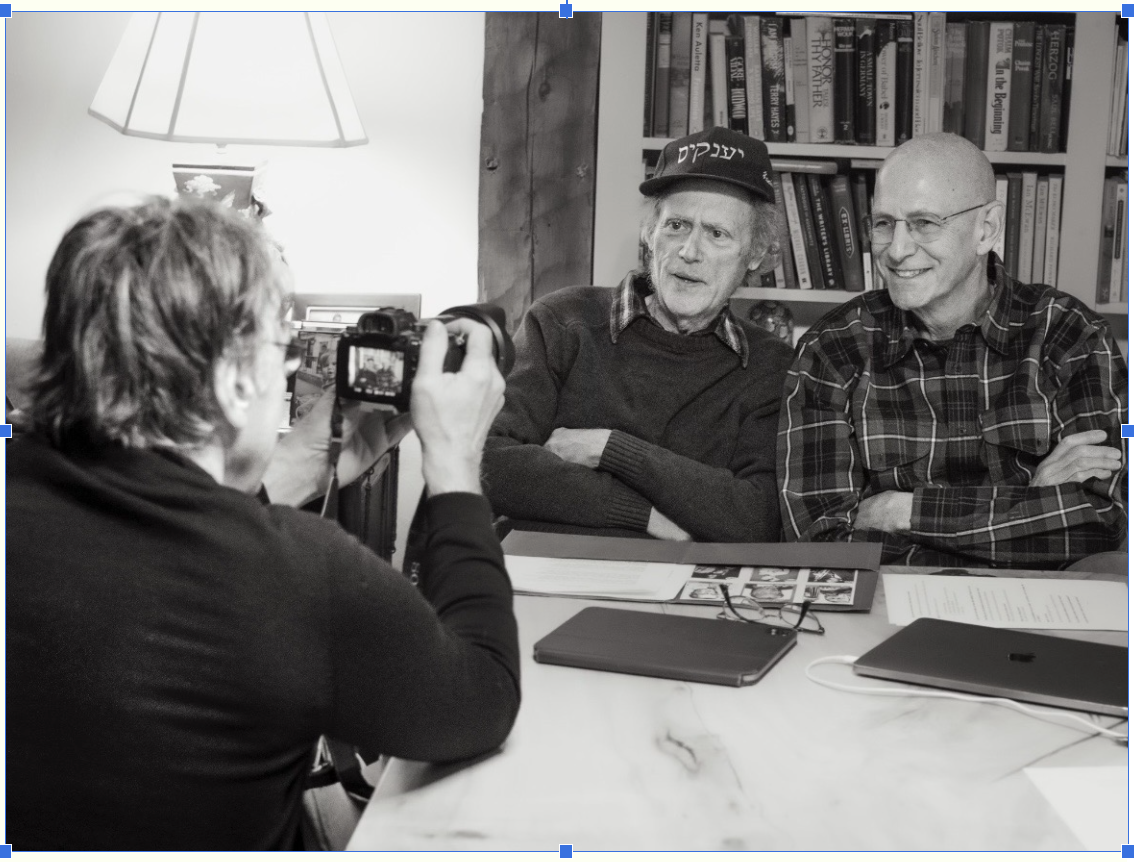
(Photo Credit: Dion Ogust)
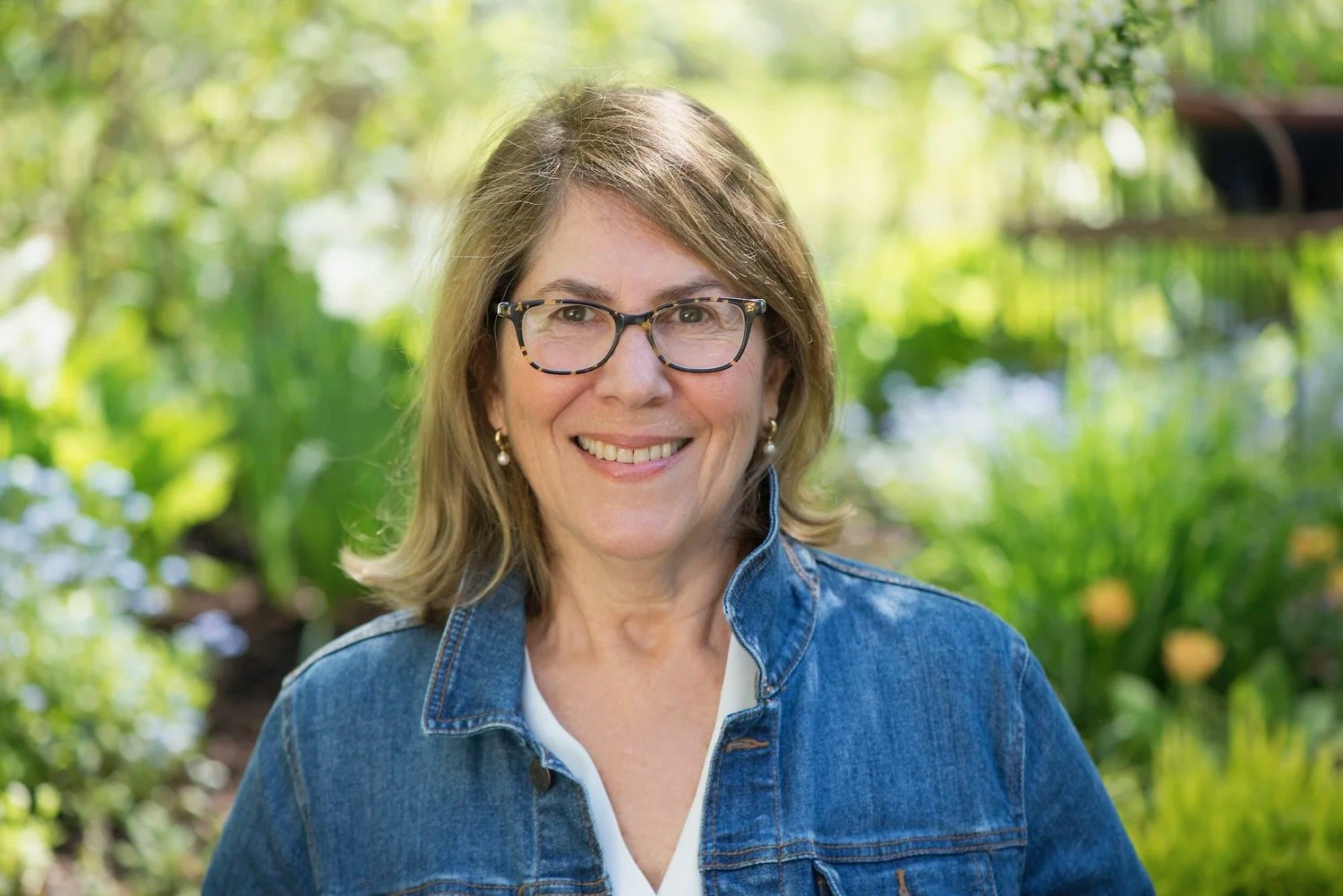
My conversation on November 21, 2025, with Rebecca Rego Barry.
When I started interviewing local authors in the Catskills for the Overlook, I reached out to the libraries and bookstores in Hunter, Hurley, Olive, Saugerties, Shandankin, and Woodstock to identify local authors for me. My friend Beth Waterman at the Phoenicia Library suggested I talk with Rebecca.
Rebecca has had an exceptional literary journey as a book historian, a library preservationist and archivist, a magazine editor, bibliophile and publisher, as well as the author of hundreds of articles, essays, book reviews, and two books, and a chapter in another book as well. Rebecca lives in Chichester, a hamlet of Shandaken, with her husband Brett Barry, the host of the popular Catskills’ podcast “Kaatscast.” The couple recently became part owners of Catskills book publisher, the Purple Mountain Press. In our discussion, Rebecca observed “I literally think of nothing else but books all the time.”
A condensed and edited version of my interview with Rebecca was published on January 22, 2026, in The Overlook, community journalism serving Hunter, Hurley, Olive, Saugerties, Shandaken, and Woodstock, New York, and our conversation can soon be heard on my podcast, “Tell Me What You’re Reading”, available on Apple Podcasts, Spotify and wherever else you listen to podcasts.
Howard Altarescu
H: Rebecca, so nice to meet you.
R: So nice to meet you. Thanks for having me.
What inspired you to write your first book? How did you get started in this book writing business?
R: Well, my first book, which is called Rare Books Uncovered, really came out of the journalism I was doing. So for about 15 years, I was a journalist covering mostly the rare book market, auctions, collecting, antiques, that kind of thing. And I was the editor of a magazine called “Fine Books and Collections” for a long time. And I just got really lucky because this publisher, this British publisher, The Quarto Group, which has a division in the United States, reached out to me and they wanted to do a book about rare book finds. They had done a couple like this, one about vintage guitars, I think, another one about vintage motorcycles, this kind of attic find or barn find idea, antiques roadshow kind of idea. And they were like, hey, we want to do this kind of thing with books and manuscripts. Is it possible? And I kind of thought it was a scam at first. Publishers don't really reach out like that with actual contracts and actual advances. So, you know, it took me a little while, but I was like, yeah, absolutely this can happen. And I know because this is my little area of expertise, I know the collectors, almost every collector's got a story like that. So it was really just luck. being at the right place at the right time.
H: Chance favors the prepared mind. You had laid the foundation for it.
What's your most recent book and what’s its back story?
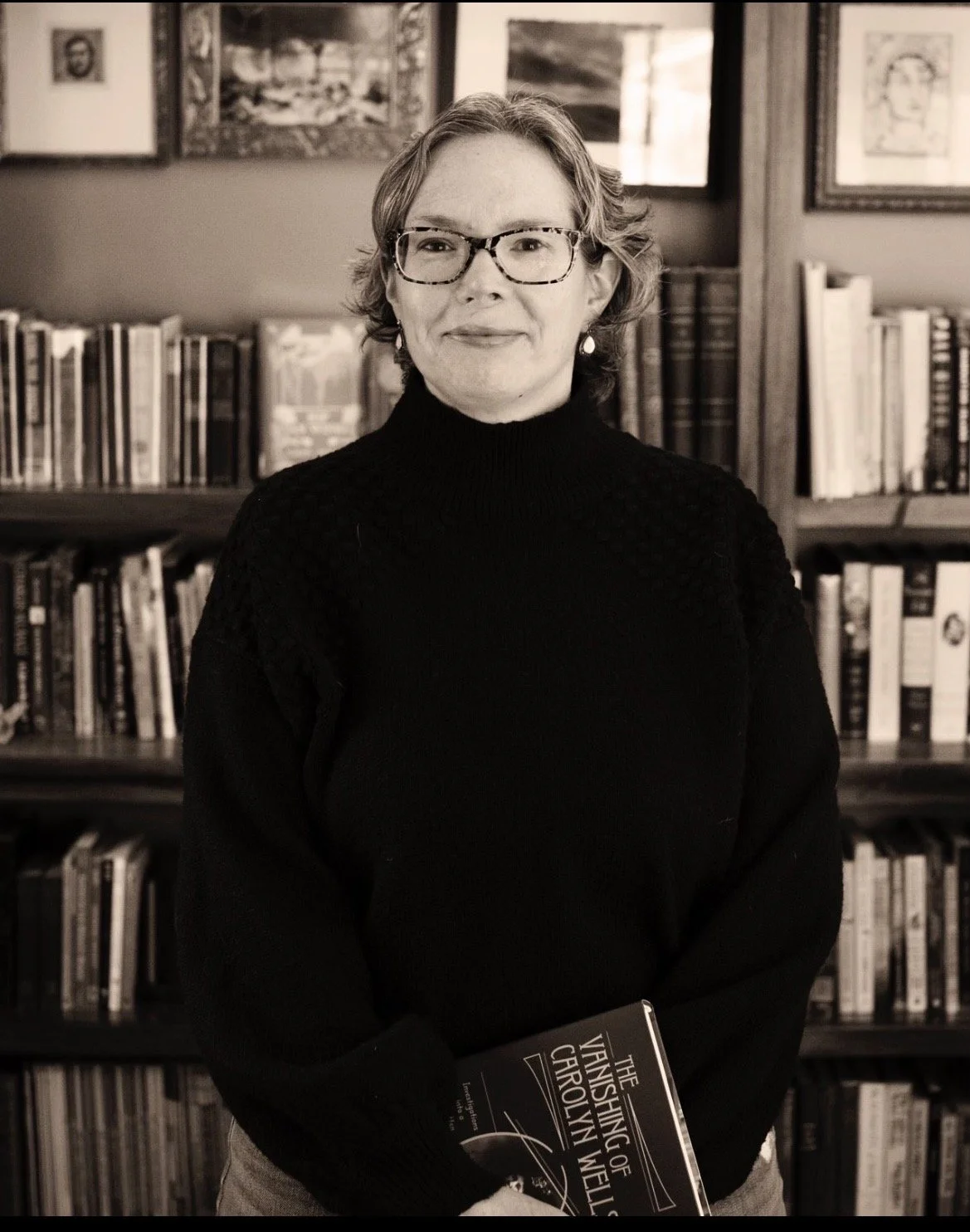
R: My most recent book is called The Vanishing of Carolyn Wells, Investigations into a Forgotten Mystery Author, which also has a bit of a rare book and collecting element, but that's just kind of one strand. It's basically a biography of this woman who was a very, very famous mystery author and other things at the turn of the 20th century or well into the 20th century, actually.
And then she dies in 1942 and is completely forgotten about. I mean, just falls off the literary map. And I could not understand why there was no biography of her out there. There was very little on the internet about her. And I decided to make my own little detective search and figure it all out.
H: So a detective search about a mystery writer.
R: Exactly.
H: So what inspired this book?
R: So basically, again, rare books and collecting is kind of what ushered me into the idea. And then I would find out that it was so much bigger. And it's because my husband bought me a book at this antiquarian book fair back in 2011. And Caroline Wells’s book plate is in it. She had a book plate made for herself because she was a book collector. And I didn't think too much of it.
H: So this was her book. Your husband bought you a book that belonged to Carolyn Wells.
R: Belonged to her, yeah. Yes, It was actually an old edition of Walden. And it had her book plate in it. But it didn't mean very much to me because I didn't know the name Carolyn Wells. So it kind of went up on the shelf. I was more interested that it was Walden, than that it was hers. And it took me years to kind of really figure out that she was also this famous mystery author. And then in the course of doing a little bit of research, I thought I was gonna write a little magazine article about her, which I did. But in the course of researching that article, I find out that she was not just a mystery author. She had been a really famous humor writer. had written for every major and minor magazine from like the 1890s through the 1940s. She was the first editor of the Best American Mystery Story series, which is still in print today. She was a crossword puzzle master and did some of the earliest crossword puzzles. She was a young adult novelist. She wrote like 30 young adult novels. So she literally was everywhere for several decades. Her output is around 180 books. So I just started researching her and I thought, wow, this is an enormous story and why do I not know her name?
H: Amazing. And when did that book come out?
R: It came out last year.
H: That's great.
Is there a theme that runs through your work?
H: So now you've written, I said you've written hundreds of articles and essays and I don't know if it's literally hundreds, but I looked at the list of them. It's many, many, So your books, your articles, your essays, your book reviews, is there a theme at all that runs through these?
R: I don't know if there's a theme so much as, you know, I really took rare books, auctions, old things as my primary subject. Yeah, right. For the articles as well. Yeah, pretty much. I mean, some of them kind of might be just more literary topics. An interview with an author or a museum exhibit review or something like that related to an author or historical subject. Those are kind of my cozy places.
Have you written any fiction?
H: And have you written any fiction or any of your articles fiction?
R: No, I mean, I definitely have the proverbial manuscript in a drawer, which I wrote in 2018, 2019. I made the mistake of, you know, pitching to agents in 2020 when no one cared about that and getting discouraged by all of that and just putting it in a drawer and thinking maybe I'll go back there one day.
H: Is that something you want to talk about or you want to keep that in the drawer?
R: Yeah.
H: Okay, I understand that.
What are the challenges you faced?
H: So your two books, maybe your articles and book reviews also, but particularly two books, what are the challenges you faced? What are the hurdles of getting started and getting that done?
R: Well, I think for most people time is the biggest hurdle. I mean, for many writers, it's not your primary source of income. So you have a day job. Maybe you're also a parent. So trying to fit the writing in around those things is a hurdle. And I think with my second book, as you know, I kind of talked about the fact that my first book was this lucky publisher calling me a situation. But for my second book, I had to go through that usual route that writers take, which is to write a long proposal. I mean, probably 50, 75 pages. Do so much of the research, you know, out of pocket. And then try to get an agent, try to get a publisher. And each of those steps takes a long time and is discouraging.
H: Yeah. So time is the first challenge and the second is just publishing a book.
R: The mechanisms of publishing. Yeah. You send out your query and your proposal and you'll hear nothing. You know, that's hard. You know, you kind of just want somebody to reply, “no”, rather than silence.
What about your challenges as a writer?
H: Have there been challenges as a writer or this comes naturally to you? I imagine Stephen King, who continues to publish massive amounts. I'm sure it's more difficult, but he sits down. He just writes. And of course, he gets published. But does writing come naturally or are there hurdles, challenges there as well?
R: I think it comes pretty naturally. And I definitely am the kind of writer that needs to make a good outline. Maybe it's not 100 percent of the way there, but it's probably 75 or 80 percent the way there. And I also really need good blocks of time. Whenever I read interviews with authors and they're like, oh, I wrote 30 minutes on the book, 30 minutes at my soccer game, I think, how does your brain do that? Like I need to sit down and know I've got two three hours Where I can just sink into the material I can't work if I know that I'm gonna have to take a break of 30 minutes or I'm gonna have to run out somewhere else and I can't do that
H: So you need a block of time, but finding time is the difficult part, especially for blocks. I'm drawing a blank on the book I read, a wonderful book, a memoir, and the young woman who wrote it, wrote it by dictating on her notes app, on her iPhone, on the subway to work every day.
R: Wow.
H: I find with my own project, I steal time whenever I can, although it’s much better for me to do it the way you're suggesting. When I get there in depth, that's when things develop. But if I think of something, I'll write a note and then I'll find time. This morning when I realized I couldn't get up there, I had saved half an hour. So I wrote for half an hour.
Have there been particular authors or books that have influenced you, your writing style in any way?
R: I always, my kids will attest to this, I always go back to Anne Lamott, who wrote a book called Bird by Bird. Because whenever my girls would come to me and say, I've got this long paper I have to write, I would just say, bird by bird. And that always sticks with me. You know, get the first paragraph down. Take a break.
For me, that first paragraph, when I was writing articles, I could just get the lede I'd be like, okay, good. Now I can go have lunch.
What’s your writing process?
H: So in your writing process, as you said, you're an organizer, maybe not 100%, but you've got to get yourself organized. There are some people who write like a sculptor, get the clay, shape the clay, keep working at the clay, find the hand in there somewhere. There are others who won't go from one word to the next until they're sure the first word is right. Where do you fall?
RS: I don't know if I fall into either of those. Maybe, I like my sentences and paragraphs to be almost there. I'm not going to hold up on one word necessarily. I know writers who will just say, I'll just get it down on paper and then you can get back to it later. No. If I'm in the mode and I'm thinking about it, I want sentence by sentence to pretty much be there. Yes, maybe I'll tinker with it later, but that's just going to be a good segue, or a couple of commas or maybe I'm gonna change a word, something stronger. But the sentences for the most part have to go down pretty much the way you're gonna see them.
What’s your writing routine?
H: When you are writing, do you get up every morning and write for two hours? Do you segregate blocks of time ?
R: Currently, because I'm not working on a project, no. But for both the published books and the novel, definitely. My first book, I was working at the magazine at the time and I had young children. So what I would do is magazine work, 8:00 to 1:00, quick, quick lunch, and then a block of writing, 1:30 to 3:30 or 4:00, before kids get home. The novel, similarly, I would go out to this little tea house that was between my property and my neighbors, which happened to be my in-laws. We have this little hut, and I'd go out there every day. And that was my block of time. But, because currently I can't find a block of time, it's almost like a hang up, you know, that I can't get to the next project because I can't find two or three hours every day and know that I can rely on that.
H: Time. That's the theme.
Is there a particular writing advice you've received that has been meaningful? Are there instances of common writing advice that just doesn't work for you?
R: I don't know, I haven't thought about that. I mean, aside from bird by bird and the advice to just find the time, make the time in little 20 or 30 minute increments, which I can't do. Yeah, I don't know.
Do you get feedback from your readers?
R: Yeah. Actually, I would get feedback on the first book. Like, when's the second volume coming out? Because people love reading these, the found in an attic, found in a barn kind of stories. Like I said, many book collectors have a story like this that they love to share.
H: I love the way you describe it, found in an attic, found in a barn.
R: Yeah. I mean, it's actually part of my daily life now because I work for a company that buys and sells historical documents and autographs. Pretty high-end material, George Washington letters, Abraham Lincoln letters, that kind of level of stuff. And there is this idea out there in the world that all the historical discoveries have been made, all the attic finds, all the barn finds. You're never going to find a Declaration of Independence in a picture frame. And maybe not, but it's not impossible. And I see in my day job all the time that there are people who have letters that belong to their ancestors from 200 and 300 years ago in their attics.
H: My father-in-law had a collection of lots of letters and documents signed by presidents and so on. It went with his last wife. Different story for another time,
So you've had experiences as a historian, an editor, a preservationist, an archivist, a bibliophile, a publisher. How has that all influenced your work as a writer?
R: I'd say because I worked in an archive, I know how important they are. It powered my second book a lot because what I was saying about Carolyn Wells being completely forgotten about, I mean, one of the main reasons, because there's no central archive of her stuff. When she died, she left a lot of her, most of her stuff to her maid who sold it off in auctions. So everything went in various directions, all of her letters and manuscripts, all the stuff that make up a writer's life, which for many writers, that goes to a university or an institution somewhere and then scholars can use that, but that didn't exist for Carolyn. But that is so important. And that's to me, that's one of the primary two or three reasons that she was forgotten about so easily. So I think having some experience in archives has really opened my eyes to some of those layers. Certainly the bibliophile and collecting aspects of my life have been huge. I mean they've, you know, helped me make two books.
What is your next project?
R: The next book I want to work on, which I won't say too much about, it's about a woman who has a literary streak, she has a medical streak, she has a Catskills streak. So I think I'm never going to get away from that, sort of, you know, love of books, love of literature. I think any book I write is probably going to have some element of that.
Does living in the Catskills influence your writing? How long have you lived up here?
R: We've been here 21 years, I think, yeah, when our daughter was born. But it's a good question. I don't know that I have a great answer. We moved up, and I like to joke with my husband that it took me nine years to get used to it, before I was really used to it. I grew up in Jersey. I'm very used to just a very suburban life. You need something, you can walk to it. That's not the case anymore, especially when you have young children and have to drive them to all kinds of things.
So living in the Catskills was a bit of a challenge for me for a long time. But like I said, my next project, I think, will have more of the Catskills in it than anything else I've done. But it's taken time to acclimate. And you know, I love it here. But of course, you know, big change.
What are you reading now? What do you like to read, generally?
R: Generally, I’m reading two books at a time, at least, sometimes three. Generally, I read non-fiction in audiobook version. And they're usually history, memoir, biography, those are kind of my go-to genres. So right now I'm listening to Patti Smith's new memoir called Bread of Angels. I love Patti Smith as an author, as a musician. So it's kind of a no-brainer for me to have that on my list.
And in fiction right now I'm reading My Friends by Fredrik Backman. I'm reading it because my book club, actually I'm a part of this book club, it's eight moms from Shandaken, Woodstock, Mount Tramper. We've been meeting for six, seven years. And we've read him before, so we all loved it.
Do you have other book recommendations, favorite books?
R: Favorite books, I mean gosh, I’m caught off guard by the question of favorite books because I literally think of nothing else but books all the time.
And it's usually like whatever's freshest on my mind. I will say recently I listened to a book called Shakespeare Was a Woman and Other Heresies. It came out a couple of years ago and it really addressed the whole authorship question, you know, was Shakespeare really the man of Stratford or was he, you know, and there's like a list of other people, and I'd never really thought about that question before, kind of took it for granted that Shakespeare was Shakespeare. But it is eye-opening, and incredible research and interviews. Really amazing.
R: For the last several years my number one recommendation, I would say Possession by A.S. Byatt. I think it came out in 1990 maybe. And it's about a lost manuscript, Victorian poets who are in love and a lost manuscript. And I remember reading it probably in the mid-90s. And then I read it again last winter. I was like, enough time has passed, I won't remember what happened. I can reread it now. I was really worried that I wasn't gonna like it anymore. You know, because that happens too.
H: Well this has been great fun, you're absolutely fascinating. The things you've done, the huge number of birds that you’ve gone through bird by bird, the hundreds, or large numbers of articles and book reviews, plus the books and all the archiving and preserving.
R: Yeah, and now I'm kind of a publisher as well.
H: So it's a rich literary journey.
Talk about the publishing company.
R: The publishing company is called Purple Mountain Press. It's been around since the 70s. They used to have a shop in Fleishman's. And they do, they do, we do, local history, New York state history, Catskills , Adirondacks, Lake Champlain area, natural history, Revolutionary War history.
And it's funny to me because when I started coming up here in the mid 90s, I remember seeing, at the time I was an English major in college, I sort of thought I was gonna go into publishing in some form. And my first college job was at Simon & Schuster. But we'd come up here for weekends, to visit my husband's parents. And I saw their shopfront, you know, “Purple Mountain Press”. And I thought at the moment, like, oh, if we ever live here, maybe I could work there, which is really funny because it's like just kind of a mom and pop publishing house. But now I do work there.
H: That's great. That's a great story.
R: Thank you.
H: You're welcome.
R: It’s been such a pleasure meeting you and chatting.
H: Thanks so much. I appreciate it.