Writers of the Catskills: In Conversation with Mikhail Horowitz (TMWYR Ep. #59)
Writers of the Catskills: In Conversation with Mikhail Horowitz
A series of self-portraits by Catskills’ literary voices
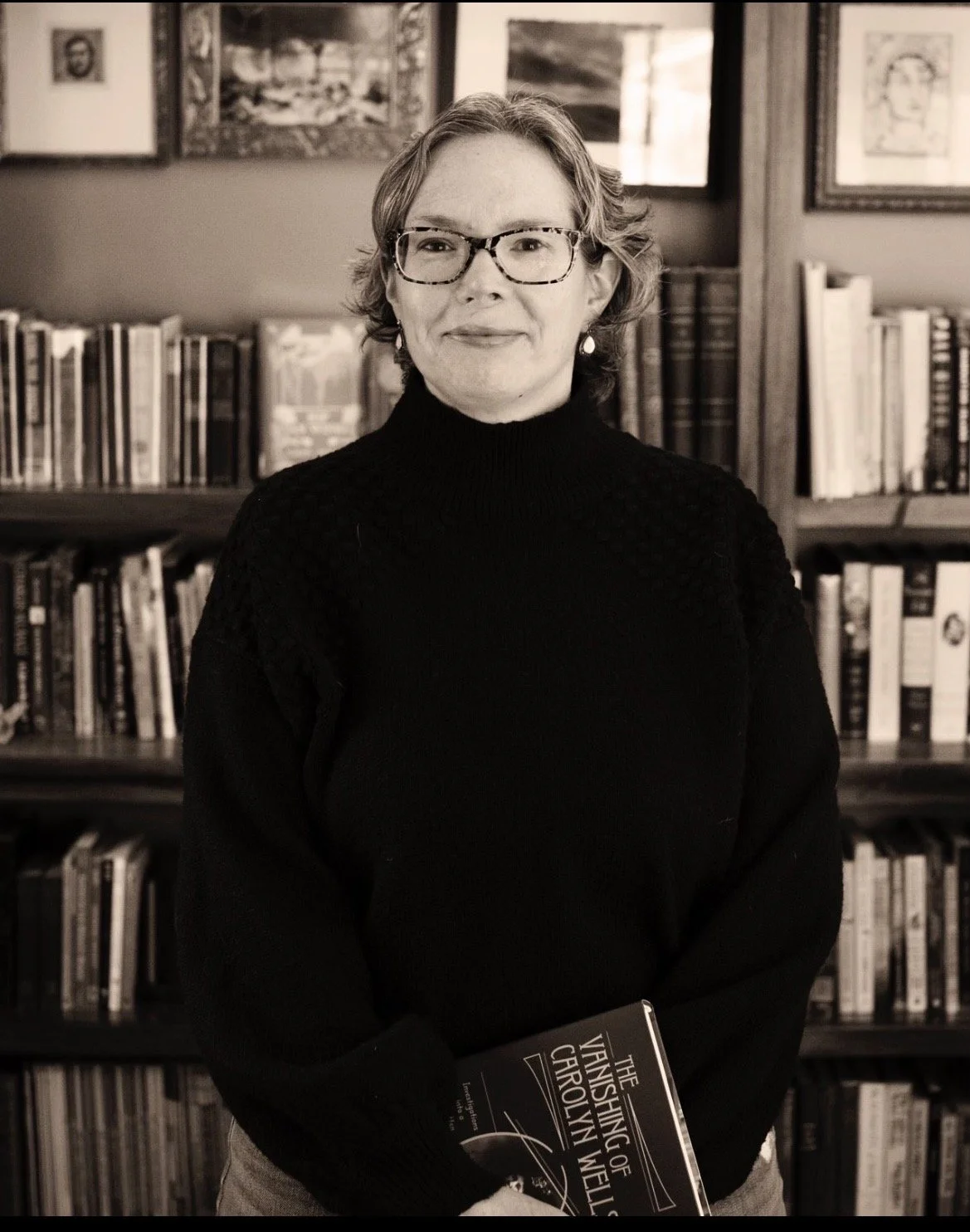
(Photo Credit: Dion Ogust)
My conversation on November 21, 2025, with Mikhail Horowitz, poet, writer, journalist, musician, satirist, performance artist and activist. Mikhail has written more than 1,000 poems (“maybe 25 are any good,” he says), along with book reviews, spoofs and satires. His work includes “Spoon River Apology,” performed at the Woodstock Community Center last June. Mikhail lived in the Town of Saugerties for 34 years, has been living in Woodstock for the past three years, and also lived in Woodstock briefly in the 1980s. In our conversation Mik described his creative process as relying on “a gift from the Muse.”
Mik was introduced to me by my Woodstock friend, Frank Spinelli, who participated in the discussion, as did my Woodstock friend, Dion Ogust .They were both also photographing Mik as we talked.
A condensed and edited version of this interview was published on December 25, 2025, in The Overlook, a nonprofit news outlet serving the Catskills communities of Hunter, Hurley, Olive, Saugerties, Shandaken, and Woodstock. and my interview with Mikhail can soon be heard on my podcast, “Tell Me What You’re Reading”, available on Apple Podcasts, Spotify and wherever else you listen to podcasts.
Howard Altarescu
H: On behalf of The Overlook, I'm in conversation today with Mikhail Horowitz. Thank you, Mikhail, for joining me for this discussion.
M: I've had people interview me and I always come off to myself as being so pompous. I don't feel that way. I hate being pompous. So we can edit that out if I'm pompous.
H: The pomposity? The pomposity can be edited. Absolutely. There's a switch here that says, “Eliminate Pomposity”.
One of your works that I like the best is Kessler at the Bat. Can we get you to recite Kessler?
M: OK. But do you want to say what it is or just start?
H: Go right ahead. You can introduce it.
M: OK. The two American narrative poems that have the widest currency, the ones that everybody knows, are “A Visit from St. Nicholas” and the other one is “Casey at the Bat”.
Casey at the Bat is so easy to parody. And many people have done that. Parody can be an homage. You don't parody something unless you really dig it on some level. But in all the parodies of Casey at the Bat, I've never seen a Jewish parody. So I decided years ago I was gonna do the Jewish version. And the idea was that the Jews had this before, and they took it away, but this is how it originally was. And it was not Casey, but Kessler at the Bat.
It looked, well, all farcockteh for the Putzville Nine that day.
The score? Don't ask. It was four to two. You heppy now? Hokeh.
And so when Plotkin plotzed at first and Schwartz popped up to third,
Already y’hay sh’may rab-boh was in the ballpark heard.
A couple schlumps got up to go. The others shrugged and stayed
For box seats on the field, boy, their tuchuses they paid.
They thought if only Kessler maybe gives the ball a zetz,
We'd shimmy through the shtetl and forget about the Mets.
But Stein proceeded, Kessler, as did his nephew Moe.
And Stein a real shmegegee was, and Moe, Moe is just a schmoe.
So maybe now for Kessler they should bother not to wait,
Moshiach had a better chance of schlepping to the plate.
But Stein, he blooped a bingle and his mother cried, Mein Gott!
And Moshe clubbed a double. I should drop dead on the spot.
And when they finished running and bent wheezing at the waist,
There was Moe verklempt on second and Stein on third. Verstehst?
So now from all those Putzville fans was such a big to do.
They rose and davened in a wave, a hundred shofars blew.
A host of angels wept to hear a thousand chazzans sing,
for Kessler, Rebbe Kessler, he was coming up to swing.
There was schmaltz on Kessler's tallis as he stepped into the box.
In his beard were crumbs of matzo, small piece cheese, a bissel lox.
And when he shook his shtreimel, drenching half the fans with sweat,
No goyim in the crowd could doubt, ‘twas Kessler at the bet.
And now the mystic, kabbalistic pitch comes floating in,
And Kessler's brow is furrowed, and he slowly strokes his chin.
He comprehends that long before Creation had begun,
This pitch existed somewhere, but then he hears, “strike vun”.
From the stands (donated by the Steins) the whole mishpocheh moaned.
A yenta started kvetching and a balabusta groaned.
"Hey, ump!”, an angry moyel cried, "I'll cut you like a fish”.
So nu? they would have cut him. But Kessler muttered, “Pish”.
With a smile of pure rachmanis, Great Kessler's punim shown.
He stilled the boiling moyel He bade the game go on.
He yubba-dubba-dubba’ed as the pious pitcher threw.
But he yubba-dubba-dubba’ed once too much and the umpire yelled,
“Vot, it's not for you good enough. Strike two!"
"Feh!" cried the maddened Hasids, and Elijah echoed, “Feh!”.
But a puzzled look from Kessler made the audience go, "Heh?".
They saw his payus rise and fall, they saw his tzitzits twitch.
They knew that Rebbe Kessler wouldn't miss another pitch.
The smile on Kessler's punim now is more profound and keener.
He glows with all the preternatural light of the Shekinah.
And now the pishka pishka pitch so big and fat it gets.
And now the seventh heaven feels the force of Kessler's zetz!
Oy, somewhere in Jerusalem a grandson plants a tree.
A klezmer band is playing, so the clarinet's off key.
And somewhere else a shegetz with the rebbetzin has flirted.
But there is no joy in Putzville, mighty Kessler has converted.
“The name is Kelly, if you don't mind.”
H: That was phenomenal.
M: So, questions?
H: When did you write that?
M: That's about 10 or 11 years old. And strictly it was for performance.
M/ F: Hey, Dion.
D: Sorry, I don't want to interrupt.
M: No, no, no. You're probably doing everybody a favor if you interrupt me.
When did you start writing and performing?
M: I'll give you the very first performance I ever did. It's my sixth grade talent show.
H: Where was it?
M: I'm about to tell you. Nice guy. He's got to take control.
Okay, so the sixth grade talent show. The parents were there, the teachers and the kids were all there. And we had a really hip teacher and she had us learning Shakespeare. So we were doing Macbeth, scenes from Macbeth. And there was one guy, he was Macbeth. There was a young woman, she was the only woman, so she had to be Lady Macbeth. And then me and two other kids were the three witches. We were gonna do Act I, Scene I of Macbeth. So comes the night of the performance and we had mops on our heads to make us look like witches.
H: Was this in Brooklyn?
M: This was in Brooklyn, yeah, at the State Educational Correctional Rehabilitation Health Facility, Public School 131.
F: Did they allow you to use clean mops on your head?
M: They did, but every time we rehearsed, we had to re-clean them.
But anyway, so this is the night of the performance; the guy to my right is so nervous he's catatonic. He can't move. The guy to my left is projectile vomiting. He's so scared. And I'm thinking, well, fuck this. I worked really hard on this piece. I know their parts. I could do the whole thing myself. I could change voices. So I go out there and performed all three parts.
When shall we three meet again
In thunder, lightning, or in rain?
When the hurly burly's done,
When the battle's lost and won,
There will be ere the set of the sun,
Where the place?
Upon the heath.
There to meet with Macbeth.
I come, Grey Malkin.
Paddock calls.
Anon.
Fair is foul and foul is fair,
Hover through fog and filthy air.
So there it was, Act I, Scene I of Macbeth. I pulled it off, and I won the talent show.
H: So that was your first.
M: That was my first performance. Casey at the Bat, the original might have been my second. And might have been in junior high.
H: And all this is in Brooklyn.
M: Yeah, this is in Borough Park, between 10th Avenue and Fort Hamilton Parkway.
Was it always your objective to be a performer, a writer, an editor?
M: Not then, but after the Macbeth performance and after Casey at the Bat, the original. I started thinking, wow, this is not bad. I mean, I'm the center of attention, which is good. And it's not because I fucked up and did anything bad. I mean, everybody is really enjoying it. So I felt, you know, that was it. Theater. I just said, wow, this might be the way I can navigate through life and I can be a primadonna. And everybody's paying attention to me. I'm on stage.
How did you start writing?
M: I wrote for the Woodstock Times, that was 1989, and for ten years prior to that at the Daily Freeman. I wrote much the same kind of stuff that I wrote for the Woodstock Times. Mostly arts related, including a weekly movie review that got me a fan letter from Judith Crist. The Daily Freeman didn’t have any arts coverage. Nothing. When I came aboard with three or four other really good people like Rob Borcellino, Modele Clark and Carol Guensberg, all these people, we brought the first arts coverage to that paper.
I started writing at a very young age and I was glad I did. My parents really encouraged it and my teachers did in school. I was lucky with that too. In fact, my second grade teacher skipped me to the fourth grade because she said there's nothing she could teach me at the second grade level. I had a junior high school reading level..
H: And how'd that come about?
M: My parents taught me how to read really early. Yeah, I loved it. And for presents, I always got books.
Remember those little notebooks that had the black and white patterns? My teacher gave me one of these books and said, when I give the rest of the class the assignment for reading and writing, you don't have to take it. She said, I'm giving you this book. You go to the back of the room and you pick out any book you want to read and write a little report on it or write something else. It was that kind of encouragement. So over the course of the school year, I filled up three or four of these books. And I still have two of them.
H: That's amazing.
M: The first poem I ever wrote was a bit of doggerel. And I illustrated it too.
It was called “The Fisherman's Fight”.
I fished all day and I fished all night,
but I never caught a single bite.
I fished for salmon and I fished for trout,
but I never caught them, there is no doubt.
And there was a little picture of a guy on a cliff with a pole hooking a tire, like a Firestone tire. But you know, I had never been fishing, I grew up in the city. The only place to fish was the Gowanus Canal.
I started seriously writing in my teens and getting turned on to writers, various writers.
H: You mentioned that you’ve written over 1,000 poems.
M: I'd say maybe 25 of them are any good.
Who was the first poet who turned you on?
M: Vachel Lindsay, a proto-performance poet of the 1920s. He was a great reader and a great actor,and he'd go from town to town and put up posters that there was a poetry reading tonight at the community center or what not, and he'd get donations, and that's how he got his coffee and a sandwich the next day.
He was probably the first Caucasian poet to draw from a Black perspective, incorporating jazz rhythms and the cadences of Black preachers.. His poem “The Congo”, was a pretty big deal back then.
The sound of that is what turned me on. And I would say most of my stuff is written by ear, not so much by intellect. You go with the sound of something, you get into the sound, and it does something to you.
From Lindsay’s point of view, “The Congo” was an appreciation of African and African American culture. Today, however, it’s hard to miss the paternalistic attitude toward Black culture.
So how did your poetry develop over the years?
M: Very agonizingly. I started doing a lot of reading. What I tell people who want to write poetry and are serious about it, you have to read poetry or things that relate to poetry, not only poetry per se. Yeah, you have to know what's being done out there. You come up with something and it's far out, but you have to realize that you're not the first person to have that thought. You're not the first person to compare the full moon to a golden coin, let's just say. Other people have had the same thought.
The poet Gary Snyder has said that if you want to be a good poet, you have to learn a lot of things outside of poetry: the constellations at night, the names of the local flora, the animals where you live, where you get your water - that's all part of your job description as a poet.
H: You gotta have context.
M: Absolutely.
Who are some of the poets you admire?
M: Chinese poets of the T’ang Dynasty; the English Romantics; and the Beats, and that whole crew, that whole era. I love those poets, they came along when ivory tower, academic poetry held sway. And there's also the New York School of Poetry, amazing people. As someone once said about them, “they were America’s finest French surrealist poets.”
And Ginsberg. I did a parody of Ginsberg writing “Casey at the Bat”. It's called “Howl for Casey”. I’ll just do the beginning.
I saw the best bats of my generation destroyed by spitballs
Curving elliptically plate-ward dragging themselves through the little leagues at dawn, looking for an angry hit.
Ruthian sluggers staggering on stadium roofs illuminated, rounding incredible bags and coming home.
Who slumped and watched their Louisville timbers go limp
And booed their fate under celestial arc lights
As the rabid fans in madness also booed.
Who emerging from dugouts, dugouts, dugouts into the navel’s on-deck circles Where they were dished up umbilical curve balls by embryonic portsiders.
And it goes on, it follows the whole scheme of his poem. There is a lot of sexual imagery, a lot of Buddhist religious imagery.
Who split hairs with the old barber in Kiner's Korner.
Insatiable catchers with foul balls,
Lumbering on Buddhist shin guards for the lost bunt.
And also Joseph Moncure March, who was writing in the 1920s. He was one of the first staff writers for The New Yorker when it was new. He wrote a novel in verse called "The Set Up". It's about a boxer who's the best boxer between Jack Dempsey and Joe Louis, but he's Black and they won't give him the shot at the title because they hated Jack Johnson. Here's the beginning of it. The boxer's name is Pansy Jones.
Pansy had the stuff, but his skin was brown.
Never had no shot at the middleweight crown.
Mean as a panther, Quick as a fox.
He could hit like a mule, he knew how to box.
A jungle jinx with eyes like a lynx, a head like a bullet, a face like the Sphinx.
He was battered, grim, massive, always impassive.
That is rap. That's rap rhythms written in the 1920s by a white guy. I'm not saying that rap's a white thing, I am saying that nothing comes out of nowhere, that there's always a precedent for something.
What’s your favorite piece of work?
M: “Swingin’ Cicadas”, the first cut on my “Blues of the Birth” CD. Lord Buckley was a 1950s jazz comic, he swung with all the great jazz players and invented a fictitious language, which was the real hipster language. And I did that cut in his style.
“Swingin’ Cicadas” is incredibly intricate. The amazing thing was in the recording studio, there was just one take. I did this thing in one take and I didn't even have the chops to do that five years after I did it. I couldn’t do anything remotely like that again.
F: Was it rapping or just did you have an instrument with it?
M: The instrument was my voice.
Have you had any interaction with anyone you've written about?
M: One of the best interactions I had was with Allen Ginsberg. I wrote “Howl for Casey” that I did for you guys, and got to recite it to him.
And here's the sound thing. Ginsberg did a reading up here in Woodstock and we were driving him home to the lower east side. I'm in the back of the car, and Carlos, my friend, tells Ginsburg I've written a parody of his poem. And I said, there's no way I want to do this baby. And Ginsberg says, "Do it, I want to hear it." So I did it, and some of it is very funny, but he didn't crack a smile through it, and he just sat there listening very intently for the seven or eight minutes it takes to recite it. Afterwards, he said, “You know, I've heard dozens of parodies of that poem, but yours is the best, yours is the only one that captures my voice and my long-line, long-breath biblical rhythms … it's good." I was totally chuffed. I ate out on that for about a week.
When you started with your poetry, did you have a routine?
M: No. It was when I had time. I was working full-time through all this stuff. Worked with the Freeman and the Times, and I worked for John Thorn's sports book publishing business, Total Sports.
I wrote when I had time. But, every once in a while you get a gift. Something comes in, you don’t know where it's from. But you know, it's perfect. You have to just throw a comma somewhere. It's complete. That's the kind of inspiration you have to build yourself up to getting. And that's when it starts getting metaphysical, you know.
What can you say? You get a gift from the Muse, but it's only because you've done the work leading up to that.
What’s been your writing process?
F: When did you realize, I mean a lot of writers write from their gut and what they feel like inside, But you seem to write from your ears.
M: I do write from my ears. It's odd to hear that you say that. Most of my stuff is written by ear, not so much by intellect. You go with the sound of something, you get into the sound, and it does something to you and then you just have to get out of your own way.
F: It's odd, but it makes sense. I listen to your CDs in my car and I laugh.
M: I'm glad, man. That's the whole point.
H: Do you get royalties every time he laughs?
M: Every time he laughs, I get a check in the mail for $1.50.
H: A dollar three eighty my dad would say.
What was Rafting through the Afterlife?
M: Rafting through the Afterlife, that was an experiment.
H: A hell of an experiment.
M: Yeah?
M:Well thank you. I'm at the point now in my life where I don't think it worked. But there were enough good things in it to not just toss it.
H: I was interested in so much of it, but the fact that you journaled for so long was most interesting.
M: There was one year where I decided I was going to write a poem a day, and I kept at it. I went back and looked at what I had written in the past, everything, like, say on January 18th, I’d take it and consolidate it for that day.
H: Over how many years?
M: I started in the early ‘70s.
What is “Spoon River Apology”?
M: It’s a spoof of “Spoon River Anthology”, the 1912 poem by Edgar Lee Masters, who was spoofing small town America. In that day and age, rural America was thought to be pure. It wasn’t like the corruption of the cities. But Masters was from Illinois and he knew that was bullshit. He knew that there was just as much corruption in the small towns. So that's what he was kind of spoofing. And then I was spoofing him.
We performed Spoon River Apology last June with a very large cast at the Woodstock Community Center. For instance, in Woodstock, while we don’t have a country doctor going around in a horse and carriage, we have, let’s say, a Reiki practitioner driving a Lexis. I think people laughed because they recognized themselves. And they recognized other people in the audience.
You have a great love of baseball and it shows in lots of your work.
M: I’ve done baseball-themed collages, and have written many articles, reviews, books, satires, parodies and poems about baseball. When Orlando Cepeda was elected to the Baseball Hall of Fame in 1999, I wrote a poem titled “Phil Whalen, Zen Master, Meets Orlando Cepeda, First Buddhist Elected to Baseball Hall of Fame”.
Does a baby bull have Buddha nature?
Not even the wind fluttering prayer flags in the abandoned grandstand can say.
Peanuts and popcorn in your begging bowl.
A pinecone nestled snugly in your glove.
How many times being hit by a pitch until you gained enlightenment?
379 homers or 379 drops of rain pelting a temple bell?
Did you play ball growing up in Brooklyn?
M: Yep. We played stickball.
H: Pensy-Pinky or Spaldeen?
M: Spaldeen, man. You could just drop a Spaldeen like this and it'll go right up into your hand.
H: So I always tell the story of - and people don't believe me, probably Dion doesn't believe me - when a Spaldeen dropped into a sewer, we took a broomstick, put gum at the end of the broomstick, and got it out.
M: That was one method. Anything that was sticky. Everybody had gum. And then you put the gum back. In your mouth, yeah.
H: You certainly play with the ball.
M: There were several variations of stickball. The one I liked best was the fungo style. Fungo is when you throw the ball by yourself, you're the pitcher, you time it and then you hit it.
H: So you can throw it up yourself and hit it or you can bounce it down and hit it.
M: Then you also could play against the brick wall. You had targets and a pitcher could throw the ball. You take your swing. I don't know if it's still like that anymore now that everybody's got these [mobile devices].
My friends were incredibly inventive. We made up all these games and some of them were very challenging.
H: Did you play Johnny on the Pony?
M: Yeah. I almost broke my fucking back.
H: It's such an odd thing to think about today.
M: Right. I wonder if there's still people... I know there's still people who play stickball. There's a story every year in the Times about these alta-cockers, you know, and they're just preserving it. So they play.
H: I doubt people play Johnny on the Pony. We played it on a handball court. So if you fell, you were really gonna hurt. And you would fall.
M: Yeah, right. Should we just explain what Johnny on the Pony is?
H: Go ahead.
M: You make a line holding on like this, and onto the back of the guy in front of you. And somebody takes a running jump, and he's got to land on your back.
H: And there are two, three, four guys.
M: Right, right, right. And as far as you get, you get a score. It’s like Evel Knievel. Remember going over the chasm. If you can, you go over three or four guys with one jump, and then you come down on your knees on the poor bastards.
Our stickball game was right below this crazy woman, Mrs. Popkin. And we had to have a lookout. Because as soon as she heard the ball hit a wall, she'd open the window, she'd say, “Go vey from here. You stinky kids, go veh, you break my windows”. And we just kind of ignored her. And we'd come back and then she'd boil water. And pour the water out. And it was like storming a medieval castle. She'd pour boiling water on us. That's why we had to have a spotter.
What's your favorite post-apocalyptic novel?
M: Riddley Walker. It's this picaresque novel by Russell Hoban, who's a wonderful, fabulous writer. And there's a lot of books written now about the coming dystopia. But this, for me, was the only one that really worked. He takes it all the way to the devolution of the English language. The whole book is written in a broken down version of English. It's frightening. A lot of people get turned off by it. My late wife Carol couldn't read it. She gave up on the third page. But the trick is reading it aloud. If you read it aloud it suddenly all coalesces, it makes sense.
H: Cormac McCarthy, The Road?
M: Yeah, yeah, that's a good one. That's my second favorite. The Road, yeah. Great book. How many ways can you describe the color gray? He does it, man, and it's new every time. I mean, it's amazing.
Do you have projects on the runway?
M: I did have some, but right now, I don't know, I haven't done anything that I've been really happy with in a while. The field is fallow right now. The well is dry.
But you know, here's where you start talking about, well, I had a good life. I mean, I had these things working for me when they did. And it got me in touch with other people. That was my ticket out of myself to get involved with Democratic politics and things like that.
Are you still an activist?
M: You do what you can do. I mean it's like, why am I not doing pointedly political things right now? Because it's too depressing, too discouraging, and maybe return to something that gives me pleasure and gives other people pleasure. And maybe that's the best way you can fight this kind of a thing. You can be everything that they're not and that they don't want you to be. And that they're trying to repress. And you just give them a big fuck you and you just try to create beauty. I don't know.
H: I think that's a wonderful thing.
M: I think so too.
What did your parents do?
M: My mom was a school teacher in the New York City public schools for 20 years in Brooklyn. And my dad was an accountant for a large New York City firm that made women’s apparel. But, he wanted to be a poet, and he had a supportive family.
H: Poet?
M: Yep.
H: Did he write poetry?
M: He wrote the worst poetry you've ever read in your life.
H: You never told him that?
M: No. I encouraged him. He was a sensitive guy. Everybody who knew him said he was the kindest person they ever knew.
H: That is so nice.
M: It was. I loved him.
H: Did you have siblings?
M: Siblings? Yeah, my sister, and my sister's the artist in the family, as far as I'm concerned. And she lives in High Falls with her husband,
H: What kind of art does she do?
M: It's so hard to describe. It's as if she was bringing back artifacts from an alien civilization. And she's invented these ways of doing stuff like imprinting weird signs or hieroglyphics in stones. Things like that.
F: What's her name?
M: Sue. Susan Horowitz.
H: You're eclectic. Your sister’s eclectic.
M: Yeah.
H: Your mother was a teacher, your father was an accountant.
M: Yeah.
H: How does this happen? It's a beautiful thing that it happens, but how does this happen?.
M: Well, I have no idea how it happens.
H: I’m glad it did.
Thank you
H: Thank you. Great discussion. Thank you so much.
M: Thank you so much, man.
H: It was amazing. Absolutely amazing. inspiring, and also amusing.
*******